For years, digital advertising chased scale like it was the only metric that mattered… More impressions. Bigger files. Higher match rates.
But in connected TV, the white-hot chase after Big Data is running smack into the cold waters of reality. CTV data accuracy is now the metric that matters most as CTV is expected to drive business outcomes, from site visits, to retail sales, to household-level behavior. When outcomes matter, precision matters—and as our recent State of CTV Data Accuracy research reveals, we’ve got a lot of work to do on the precision front.
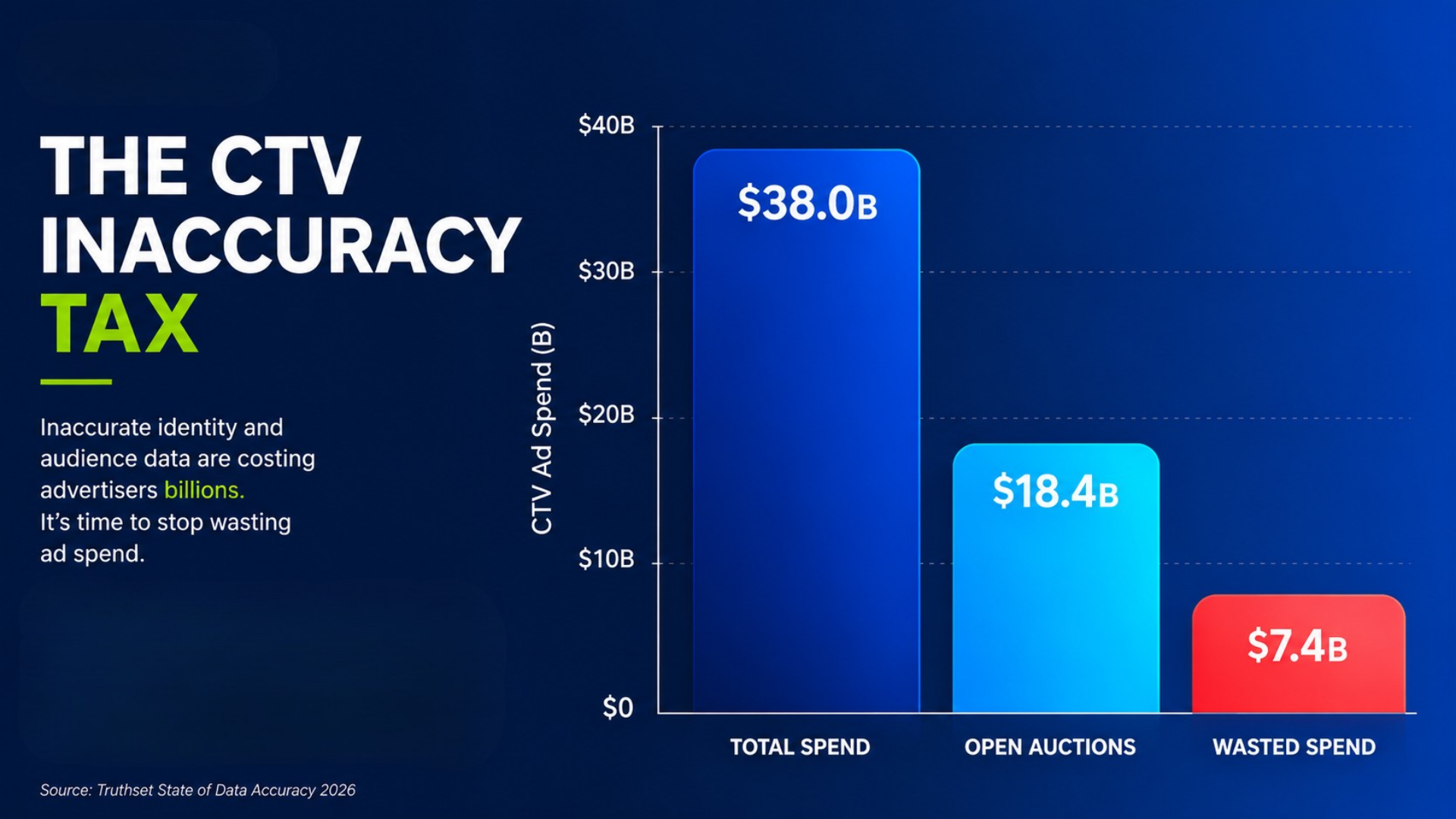
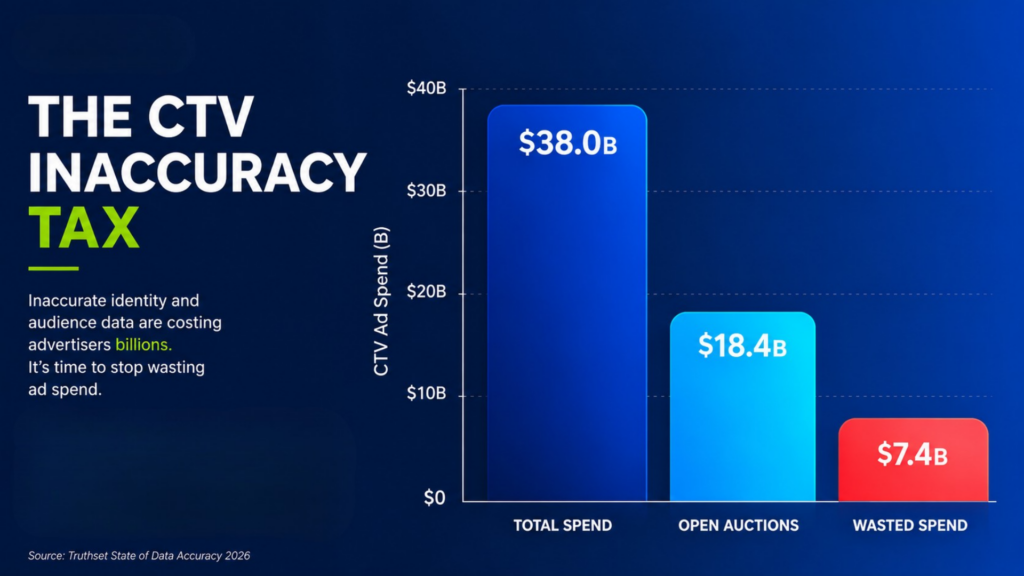
Scale without precision, it turns out, isn’t just inefficient—it’s expensive guesswork. With U.S. CTV ad spend projected to reach $38 billion in 2026, even small accuracy gaps translate into enormous financial impact. Truthset estimates roughly $7.4 billion of that spend will be wasted due to inaccurate identity and audience data.
So. How did we get here, and where do we go now?
The Old Game: Scale First, Accuracy Later
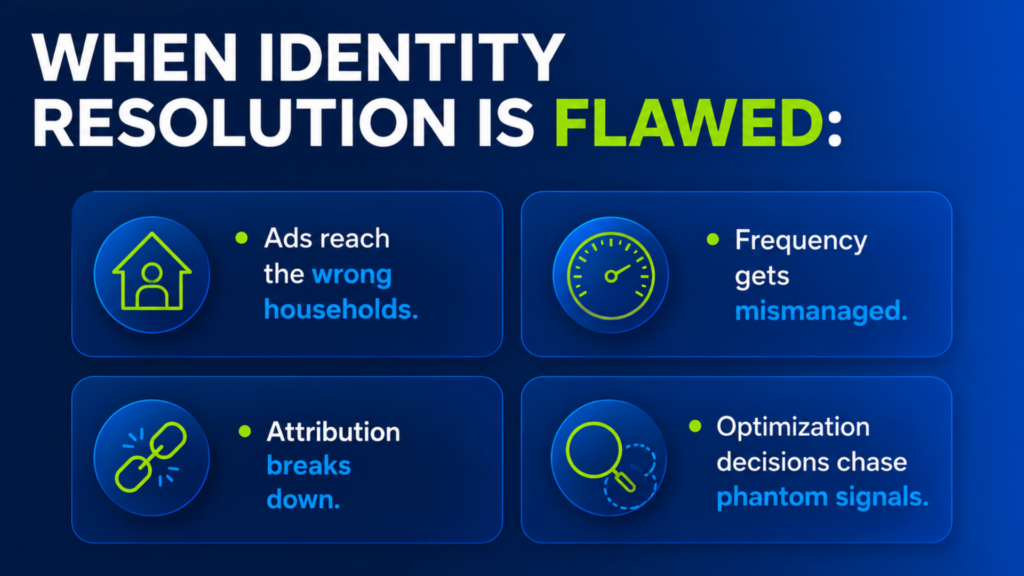
Programmatic CTV inherited many of its identity foundations from the open web. Signals like IP addresses, modeled demographics, and probabilistic household graphs were designed for reach, rather than strict truth. As the ecosystem scaled, advertisers leaned into large audience pools, assuming that more data meant better performance.
But, well, we all know what they say about assumptions, and if not, what we’re seeing on the biggest screen in the home is a good reminder. The result is the illusion of scale without real performance. That tradeoff was tolerable when TV was measured in impressions. It becomes far more costly when TV is measured in outcomes.
The New Game: Accuracy at Any Scale
We’re in the midst of an important shift in how advertisers approach CTV.
The future of CTV isn’t “more data.” It’s better data. Truthset’s Data Rated Audiences™ platform brings transparency and accountability to audience quality across the open web and CTV ecosystem, allowing buyers to activate segments based on verified performance rather than blind automation.
Marketers no longer have to choose between reach and results. Advances in identity validation, cross-provider scoring, and independent data ratings are making it possible to scale campaigns with confidence.
That means advertisers can now reach big when it matters, target small when it counts, and flex between the two depending on campaign goals, creative strategy, and performance needs. CTV data accuracy isn’t the opposite of scale anymore. It’s the foundation that makes scale valuable.
Providers keep their scale. Buyers gain control over accuracy. And the market moves toward measurable outcomes instead of assumptions.
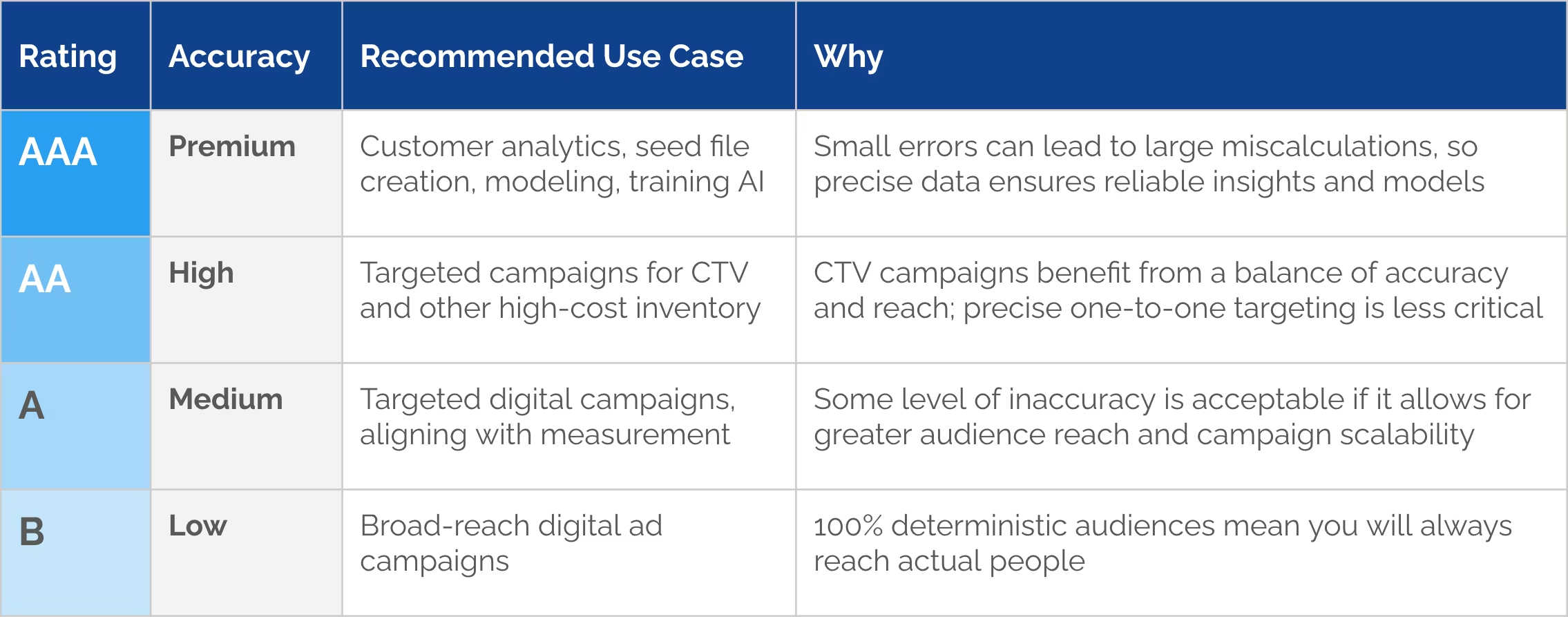
The Future Belongs to the Balanced
The most competitive advertisers in CTV this year won’t be the ones with the biggest audience files. They’ll be the ones who understand when to scale wide — and when to dial in precision — based on real, validated data. As an industry, we’re ready to move beyond just reaching households to reaching the right households—and proving it.
Download the full State of Data Accuracy 2026 report to learn how to stop paying the CTV inaccuracy tax and scale smarter, not just bigger.