Move your identity onto the Mastergraph.
Identity 1.0 outsourced the problem. Identity 2.0 hit the single-source ceiling and spent its time refereeing disputes between providers. Identity 3.0 is declared identity, independently validated at every connection.
Resolving your authenticated audience against the Mastergraph puts it on 302M validated Person IDs and 129M households, built by cross-checking 24+ providers against each other rather than taking one vendor’s word for it.
It runs on declared PII only. Email, phone, name and postal. No cookie, MAID, IP or CTV ID sits in the chain to deprecate or drift, so the identity infrastructure you stand up this year survives the next identifier that dies.
THE CASE FOR IDENTITY 3.0 →Match more of every file a buyer sends you.
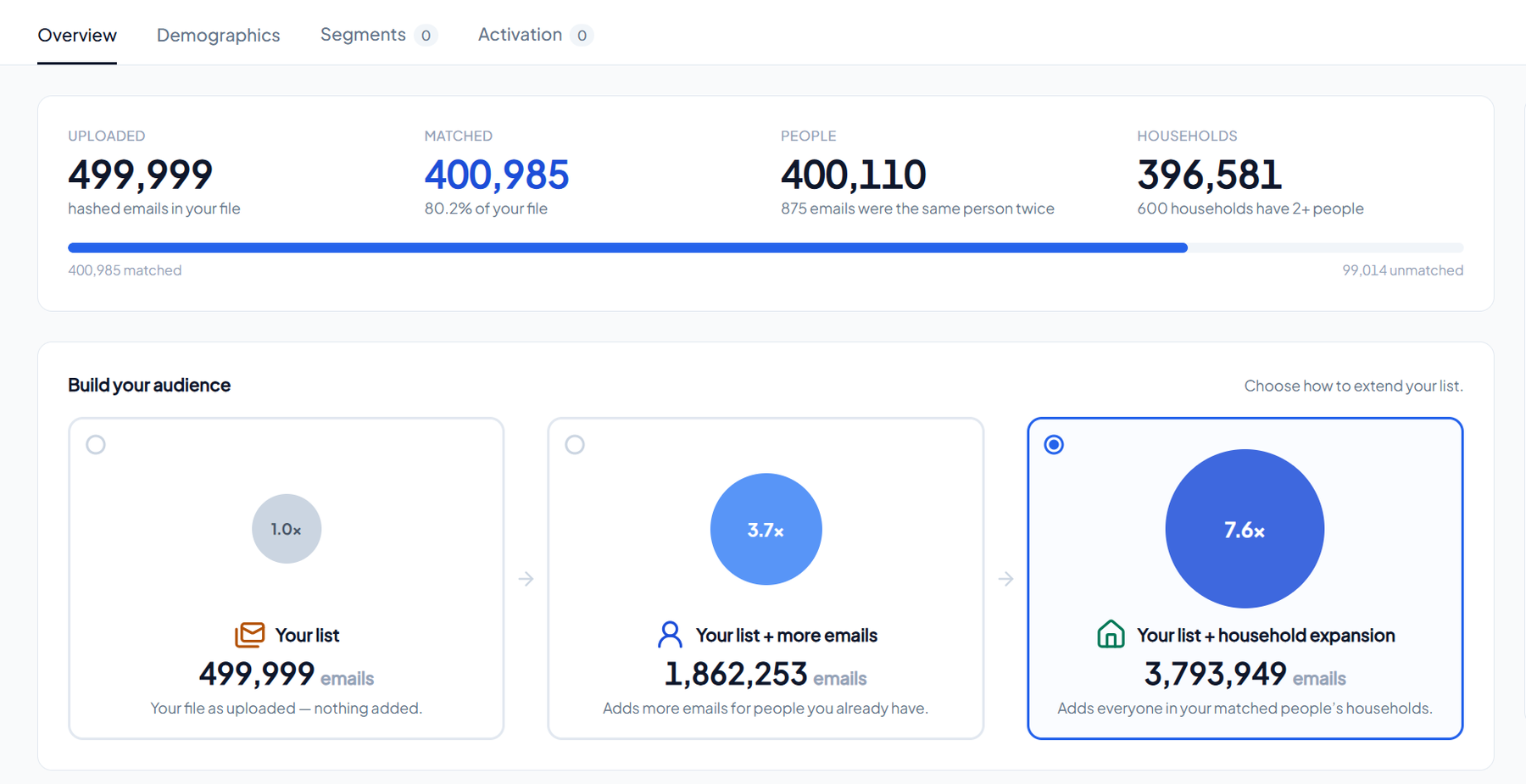
Every advertiser file that arrives for a direct deal gets matched against your audience, and the number that comes back decides how much of the campaign you can actually sell. Status-quo matching finds the one email string the advertiser happened to collect, or nothing.
ID Max resolves each record to the person, returns every validated ID that person uses, then extends to the household. Incoming files match at 40–200% higher validated rates, which is addressable inventory you already owned and could not reach.
lift in validated matches on incoming advertiser files
validated emails per person and per household
from the advertiser file to your audience
Prove the accuracy, then charge for it.
Authenticated inventory already clears at a premium.
Grading is what converts that from a story into a rate card. Every linkage in your audience carries a Data Ratings tier (AAA–B) scored against Validation Sets of deterministic ground truth covering 1.4M US consumers. Buyers see the tier distribution before they bid.
how often identity providers agree with each other, which is why proof beats a claim
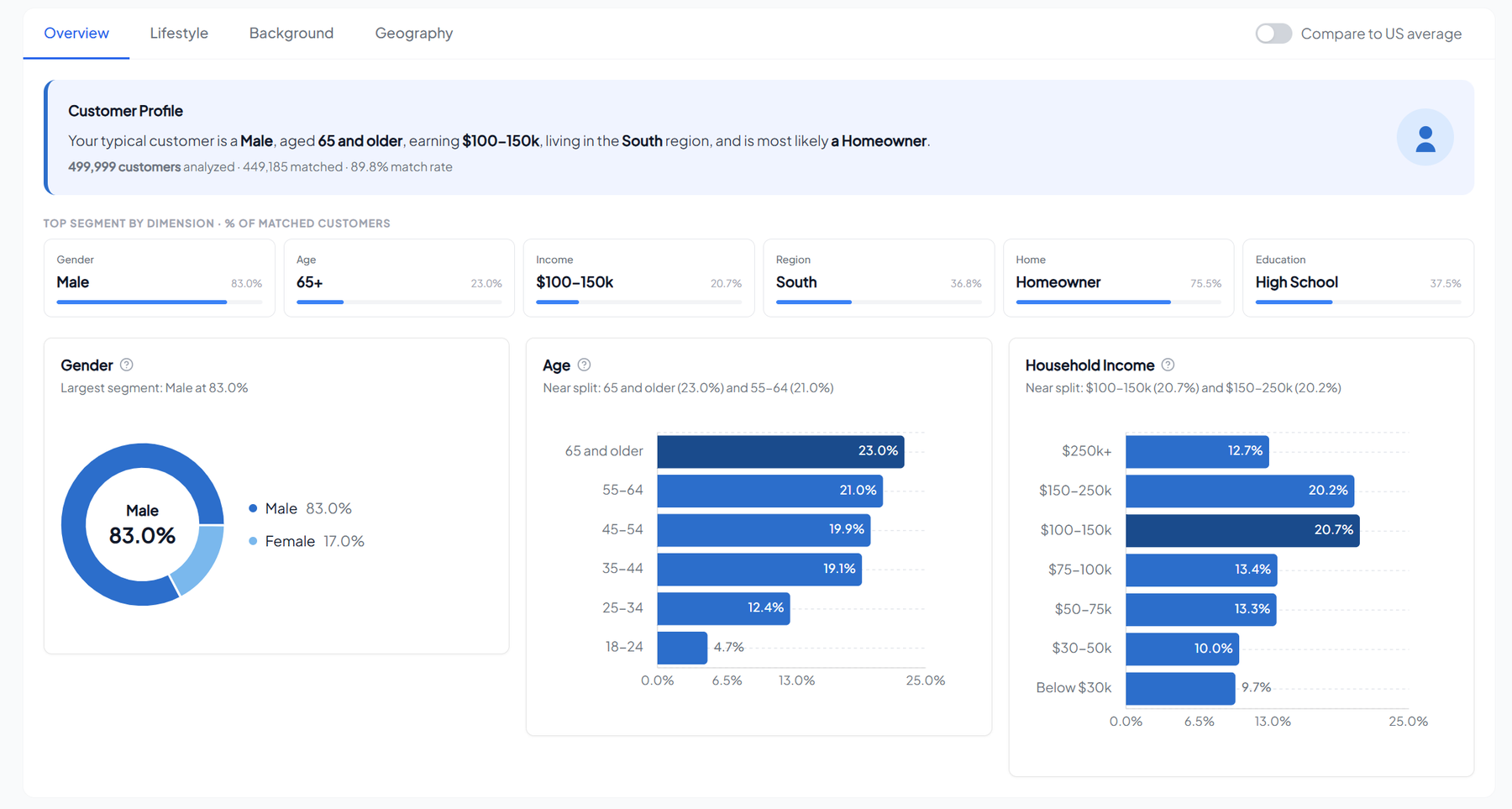
Grade your authenticated audience.
Send up to 100K hashed emails from your logged-in file. The Validated Lift Report shows how much of your audience resolves to real people, how far it extends into households, and what tier it carries.